


Past Winners

|
Sydney SmithUniversity Of Oregon |
Sydney's Essay
When you're 15, your life is predictable. When I was fifteen, I was given two titles at a
sleep-away camp, counselor and Lifeguard, my first real job. To my teenage self, the red buoy and swimsuits were fun indicators of finally growing up rather than a symbol of responsibility. However, a single hot afternoon lifeguarding brought a childlike view of the world into perspective. Replacing it with a profound understanding of how quickly the world changes and why vigilance and my red cross certification isn't a fun piece of paper, it's a symbol of trust.
It was August, the middle of a heat wave, and the pool was in constant use, making everything seem routine and predictable. In an environment of constant motion, it is easy to fall into the trap of thinking that because nothing has happened, nothing will happen, and that all the safety measures can feel unnecessary and unimportant. Until there is a stark reminder of why it isn't.
As if it happened in slow motion, I watched a kid, not older than 8, stumble on his footing and take a nose dive towards the edge of the pool. Before I could find my whistle, I heard the unforgettable sound of the smack and splash of him hitting the edge and falling in. In my head, I try to retrace the steps I took, but I would be a fool to say I remember them all. I remember entering the water, seeing the bone pushing on the skin, and stabilizing him by avoiding pressure on his shoulder. It wasn't until I was on dry land that the adrenaline cleared enough for me to see the white dots on my bathing suit had been dyed pink.
Simultaneously, as my brain was racing a million miles an hour, as my predictable world shattered, it was my responsibility to be a calm presence; it was then that the new situation of my life settled over me. I was no longer a child, and the line between fun and a life-altering emergency is me. I had been watching him, yet the accident happened faster than I could react. It was a lesson in the limits of my control over life, and the only reinforcement I will need to believe in the importance and trust lifeguards carry. I no longer see my whistle as an accessory, but the only thing loud enough to get other adults' attention. I understand that there is not a moment to soak up the sun, as that isn't just a personal liberty but a professional failure. Every boring hour I stand at the pool is worth every second in that moment, as if I hadn't been there, the consequence would have been life-altering for that child's family. That summer taught me that while we cannot predict when life will turn upside down, we can only ensure we are prepared. I carry that lesson with me not just on the pool deck, but in every responsibility I undertake.

|
Julia HeimsteadJacksonville University |
Julia's Essay
As a lifelong competitive swimmer who reached the Division I and Olympic Trials level, the pool was always where I felt the most confident. I flew through the lifeguard swim tests with ease. Growing up, the thought of others not being able to swim never even crossed my mind. However, I soon learned that confidence around water was a luxury that a lot of people do not have access to.
My first job was a summer lifeguard at a community pool when I was 15. During the following school year, I continued to lifeguard at my public Illinois high school, which required every student to take a swim class as a PE requirement. The school requiring swim class opened doors to a lot of individuals who did not have access to lessons at home. This was where my most meaningful time as a lifeguard took place. Somewhere around this time, I learned that according to the CDC, 70% of black Americans have little to no swimming ability, and 79% of children in families with household income less than $50,000 have no swimming ability. I used this information to fuel my purpose as a lifeguard. What started as a fun summer job turned into an opportunity for me to support water safety and encourage confidence around water.
One afternoon, during a sophomore PE class, I noticed a student at the edge of the shallow end. He was tall, athletic, and usually confident in other classes, but around the water, he looked nervous. His knuckles were white against the gutter, and every time the instructor encouraged him to push off the wall, he shook his head. He admitted he had nearly drowned as a child and had avoided pools ever since. Over the next few weeks, I worked with him during open swim periods. I made sure he knew I was right there. When he climbed out one day after swimming across the pool, he laughed in this surprised, almost disbelieving way, like he hadn’t expected himself to get there. A required swim class gave him an opportunity he might never have had otherwise. And being the person who could turn panic around the water into confidence is something I’ll always carry with me.
After I graduated from high school, I lifeguarded at the University of Arizona Recreation Center in the summers. One afternoon, a young girl clung to the wall in tears during swim break. She wanted to pass the deep-water test like her older brother, but she froze halfway across. I slid into the water and swam beside her, matching her pace. “You don’t have to be fast,” I told her. “Just keep moving.” She made it to the other side, exhausted but beaming. That was a moment of encouragement, taking her from fear of the water to empowerment.
Looking back on my 8 years as a lifeguard, I see how much it shaped me. I loved being a comforting presence that allowed patrons of all ages and economic backgrounds to not fear the water but grow confident, knowing they have someone looking out for them. This job taught me precision and the discipline to overprepare. The training reshaped the way I think. I learned to anticipate problems before they escalated. Many of my proudest moments were the ones when I intervened early and prevented a situation from becoming an emergency at all.
|
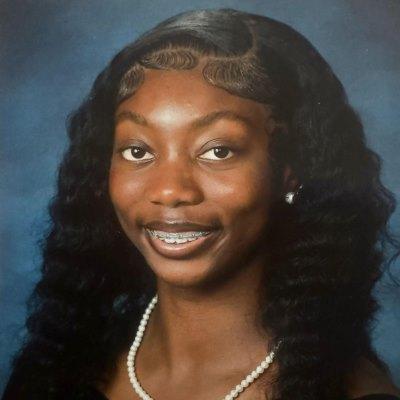
Maddison JohnsonWinston-Salem State University |
Maddison's Essay
Most people see a swimming pool as a place for recreation, but for me, the water has always been a sanctuary and a classroom. My journey began at three years old, not out of a desire for Olympic gold, but as a therapeutic intervention. Diagnosed with ADHD at a young age, my parents were determined to find a way to help me find focus and calm without relying on medication. They placed me in the water, hoping the physical demands of swimming would anchor my wandering mind. It worked. For fifteen years, the rhythm of the stroke and the silence beneath the surface have been my greatest teachers in discipline and situational awareness.
This lifelong connection to the water naturally transitioned into a professional calling. For the past two years, I have served as a lifeguard at the Orangeburg County YMCA, supplemented by a year at the Family Life Center. Whether I am stationed at the high-energy water parks or the steady lanes of the indoor pool, I carry a heavy sense of responsibility. I have assisted many swimmers struggling with cramps or exhaustion, but my most meaningful accomplishment didn’t happen while I was on the clock or wearing a uniform. It happened on a family vacation in Cancun, Mexico.
The setting was calm, but as a trained lifeguard, I never truly stop my scanning instincts. While we were out on the water, my younger cousin, who does not know how to swim was floating on a tube. In a split second, a shift in the current caused her to lose her balance and slip into the deep water. The transition from a joyful family moment to a life-threatening crisis was instantaneous.
While others were paralyzed by the initial shock, my training and my history with the water took over. There was no room for the distractions that often come with a short attention span in that moment, my focus was absolute. I dove in, reached her quickly, and used the rescue techniques I had practiced hundreds of times in South Carolina to bring her safely back to the surface and eventually to shore.
Saving a stranger is a point of professional pride, but saving a family member is a profound emotional weight. That moment solidified why I spent my teenage years working at the YMCA and the Family Life Center. It wasn't just about a summer job; it was about being the person capable of acting when everyone else is frozen.
As I prepare to attend Winston-Salem State University in the fall of 2026, I take with me the "Rams" spirit of resilience and service. My journey from a high-energy child in swim lessons to a focused life-saver has taught me that my greatest challenges can be channeled into my greatest strengths. I am ready to take that same dedication and clarity to the WSSU community.

|
Gavin BurnsTuskegee University |
Gavin's Essay
As a former year-round swimmer for seven years and lifeguarding for two, the water is like my second home. The skills I have gained through lifeguarding extend far beyond my responsibilities on the pool deck. While lifeguarding has taught me water safety and emergency response, its greatest impact has been teaching me how to remain composed and act quickly when another person's life hangs in the balance. My greatest accomplishment as a lifeguard was being able to apply those skills in a real-life emergency and help save the life of one of my teammates.
One morning during the summer season of swim practice, our team was warming up as usual. It was routine and calm until I noticed something that immediately felt wrong. While swimming, I saw a teammate slowly sinking motionless to the bottom of the pool in water about four feet deep. For a brief moment, everything seemed to stop. While others continued swimming, unaware of the danger, I recognized that this was not normal fatigue or horseplay. Something was seriously wrong.
Without hesitation, I sprang into action alongside a few teammates who were also trained lifeguards. Adrenaline surged through me, but my training took over. Working together, we quickly and safely removed him from the water and placed him in the recovery position on the pool deck. Using kickboards, I carefully supported and cushioned his head while assessing his condition. Although the situation was frightening, I knew that staying calm was essential. As I checked for breathing and a pulse, I felt an overwhelming sense of urgency. Thankfully, both were present. After being removed from the water, he was drifting in and out of consciousness, which heightened the seriousness of the situation. Knowing that he had a history of seizures, it became clear that he had likely experienced one while swimming. I immediately alerted our coach, who contacted emergency medical services. My focus remained on monitoring his condition and ensuring he stayed as stable and comfortable as possible.
Fortunately, our teammate recovered safely and was placed in the care of medical professionals upon their arrival. The relief I felt in that moment is a feeling I could never replicate myself. What could have become a devastating tragedy instead became a powerful reminder of the importance of lifeguarding to other lives as well as my own. This experience was a defining moment in my life. It transformed lifeguarding from simply a job into a profound responsibility and privilege. In those critical moments, I learned that leadership is not about holding a title, it is about stepping forward when others need help most. I discovered the value of remaining calm under immense pressure and making difficult decisions when there is no time to hesitate.
Knowing that the life I saved was one of my teammates made the experience even more meaningful and personal. Seeing someone I knew and cared about return safely to his family reinforced why lifeguarding matters. Lifeguarding has strengthened my commitment to service, responsibility, and leadership, and it has given me the confidence to act when it matters most.
|
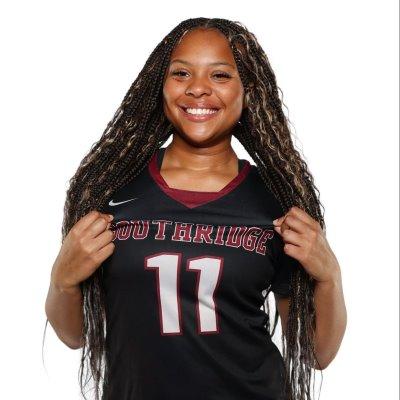
Jacodi Marie StylesDelaware state university |
Jacodi's Essay
When I think about my most meaningful accomplishment as a lifeguard, it’s not one big dramatic rescue or some huge moment people expect when they hear you work at a pool. For me, it’s the consistent responsibility of keeping people safe, especially kids who come in with zero experience or confidence in the water. The moment that stands out the most happened this past summer at Conestoga Recreation Center, and it reminded me why I wanted to be a lifeguard in the first place.
There was a little girl, probably around six or seven, who would come in almost every day for open swim. She didn’t know how to swim at all, and every time she got near the water, you could see how nervous she was. Her mom would enco rage her, but she’d still freeze up at the steps. One day, while I was on stand, I noticed her inching a little too far from the wall with her floaty barely holding her up. Before she even realized she was slipping under, I was already in the water. It wasn’t a huge rescue, but it mattered. I got her back to the wall and stayed with her until she felt okay again.
What made this moment meaningful wasn’t just getting her out of the water, lifeguards are trained for that. It was what happened after. The next week, I was working as a swim instructor, and she ended up in my class. She recognized me right away and told me, “You’re the one who saved me.” You could hear both fear and trust in her voice. Over the next few weeks, I taught her how to float, kick, blow bubbles just the basics. But I also taught her how to be brave. Every day, she came in a little more confident, and every day I felt like I was helping her rewrite her whole relationship with the water.
By the end of the session, this same kid who used to cling to the wall swam halfway across the shallow end on her own. She was smiling the whole time, and when she finished, she yelled, “Look! I did it!” That moment hit me hard. It felt like everything I trained for, everything I practiced, everything I repeated over and over as a lifeguard and instructor awareness, patience, calmness, leadership all came together.
I realized then that my most meaningful accomplishment wasn’t the rescue itself, but the impact it had after. It showed me how being a lifeguard is more than just scanning water and jumping in when something goes wrong. It’s about building trust, making people feel safe, and helping them grow. It’s about showing families that they can relax because someone responsible and alert is watching over the thing that matters most to them.
Being a lifeguard has taught me that small actions can still be big accomplishments. Helping that little girl go from terrified to confident will always be one of the moments I’m most proud of. It reminded me that sometimes the most meaningful accomplishments aren’t loud, they're the ones that change someone’s experience for the better.

|
Stephanie Juliana RubioUC Berkeley Law |
Stephanie's Essay
I pulled the zipper up the front of my hazmat suit and readjusted my gloves before putting on the Protexus PX300 Backpack sprayer. For a moment, I caught my reflection in the recreation center’s locker room mirror, the same mirror where I used to adjust the red and white uniform I wore as Los Angeles City Lifeguard. At eighteen, I had traded in my fanny pack and whistle for a badge that read: Disaster Service Worker.
Now looking back on my five-year career in aquatics, there are many moments I hold with pride. I grew up in the Los Angeles area and entered the workforce at fourteen to support my family. My desire to become a lifeguard stemmed from my own near-drowning as a toddler. By sixteen, I was working as a pool lifeguard, swim instructor, and coach. I specialized in working with special needs children, infants and adults with water-related trauma.
To fund my education, I attended community college and worked full time. However, soon after transferring to UCLA, I was struggling to make ends meet. Determined to protect my education, I sought out a promotion through the 2022 LA City Open Water Academy, knowing the outcome would decide whether I could continue my junior year. For two months, I was pushed past my limits mentally and physically through demanding ocean, land, and medical knowledge competitions. As the only woman and youngest in a group of twenty men, I placed third. Securing this promotion is one of my greatest triumphs as it allowed me to become a first-generation graduate, laying the foundation for my current path as a second-year law student at Berkeley Law.
Yet even that achievement comes second to the work I did as a frontline worker during the pandemic. I had joined LA Aquatics intending to protect my community by educating on the significance of water safety. When the shutdown began, I found myself protecting and educating my community on a virus we were only beginning to understand. As hospitals began to overflow with cases, Mayor Garcetti established shelters for the unhoused population to slow the spread. Dressed in a full hazmat suit and armed with a bleach-filled spraying backpack, I worked twelve-hour shifts disinfecting shelters across the city. I performed tasks I never expected to encounter in the workplace as I watched coworkers and fellow Angelenos begin to disappear. I served as the shelter’s designated Spanish translator, troubleshooted the initial batch of antigen COVID tests on LAUSD children, and provided first aid to our most at-risk communities.
Whether it was a poolside incident or a global outbreak, I always prioritized the well-being of those in my care. Knowing that my expertise could play a critical role in dramatically altering someone’s life was the reason I chose to get up every morning despite the fear and lack of hope I felt. For that reason, serving Los Angeles during the COVID-19 pandemic was, and remains, the most meaningful accomplishment of my lifeguarding career.

|
Kiana Rodriguez OrozcoWashington State University Tri Cities |
Kiana's Essay

|
Daniel MinkovUniversity of Illinois at Urbana-Champaign |
Daniel's Essay
As an all-season lifeguard for the past three years, I have reached many milestones. My first audit passed. My first real save. My first promotion. Yet my biggest accomplishment in lifeguarding cannot be boiled down to a single moment. Rather, it’s a plethora of experiences that have together taught me what it truly means to serve my community.
One Saturday morning, I was lifeguarding the children’s pool when one of the boys, playing happily one moment, slipped into distress the next, splashing uncontrollably and gasping for air. I immediately activated the Emergency Action Plan and brought the boy to the nearest wall. This was a jarring experience for me and the boy, Edward. Shaken, Edward was ceaselessly apologetic as I filled out an incident report. Prompted by the experience, Edward came back every week, determined to become an independent swimmer. Today, he swims effortlessly, even teaching his younger sister. But whenever he spots me on the deck, he waves at me, showing me his swimming progress or thanking me for helping him that day.
Another time, I was working the Christmas Eve shift. Pool traffic was slow, and I wanted nothing more than to be home with family. Yet, on one of my downs, I was surprised to see several patrons making their way over to the guard office with a box of donuts. “We wanted to thank you, folks, for lifeguarding out here today and wish you a Merry Christmas,” they said, handing us the donuts. This simple display of kindness made my shift, reminding me that people appreciate my work, even if it seems to go unnoticed.
One winter day, the fire alarm went off out of the blue. As I worked to evacuate the facility, I found an elderly man in the locker room struggling to get dressed for the freezing cold outside. Still wet from a swim, he could not move as quickly as the other patrons, who evacuated promptly. I stayed behind and helped the man get dressed, even offering him to use my shirt as a scarf when we stepped outside into the cold. Thankfully, it was a false alarm, but the man’s gratitude for my help was unwavering. Ever since, he has greeted me at the pool and asked me how I’ve been.
So what do these experiences have to do with my accomplishments as a lifeguard? It’s not a single save, audit, or commendation. Rather, it’s every time a patron gets out of the pool and thanks me; every time a swim lesson student sees me studying at the library and waves at me with a smile; every time I see a parent from the pool at a grocery store that looks my way and says hi. My greatest achievement as a lifeguard is the relationships and trust that I have made in my community. Lifeguarding is more than a job; it has given me a sense of purpose and belonging in my community, and these moments remind me of why I keep coming back to pick up my guard-tube time and time again.

|
Averi MuhrThe University of Texas School of Law |
Averi's Essay
Working as a lifeguard for five years shaped me more than any other job I have had, and my most meaningful accomplishment wasn’t a single dramatic rescue—it was learning how to develop a deep sense of responsibility for the safety and well-being of others. My time on the stand taught me how to remain calm when chaos erupts, how to step into leadership when others freeze, and how to offer both confidence and comfort when people feel vulnerable. Those skills have become a core part of who I am and continue to guide me now as a law student.
Early in my training, my supervisors made it clear that being a lifeguard is not a role you can take lightly. You hold other people’s lives in your hands, and you must always anticipate the worst before it happens. Over the years, that mindset became instinctive. Whether it was watching a child struggle underwater or noticing a guest exhibiting signs of heat-related illness, I learned to act before a situation escalated. Every safe outcome—especially those where the swimmer never even realized they were in danger—felt like a meaningful accomplishment. It meant the vigilance paid off.
Of course, there were moments where my training was put to the test. I vividly remember one rescue involving a young swimmer who slipped beneath the surface after becoming disoriented in deeper water. It was fast, but subtle—easy to miss if I had let my attention drift for even a second. I reached him quickly, bringing him to the wall where he clung to the ledge, shaken but unharmed. Afterward, I stayed with him, helping him slow his breathing and reassuring his worried parents. In that moment, I realized that the job wasn’t just about pulling someone from danger—it was also about restoring their sense of security. That human connection mattered just as much as the physical rescue.

|
Loni BriggsSpelman College |
Loni's Essay
winning big When Your Life Depends on it
Submit the form below for your free consultation and an attorney will reach out to you within the hour.

Injured?
Call 407-289-0000 Today.
Follow Us



Areas Served

© 2026 The Doan Law Firm
111 N. Orange Ave, Suite 800
Orlando, FL 32801
Results listed are not a guarantee or indication of future case results.

